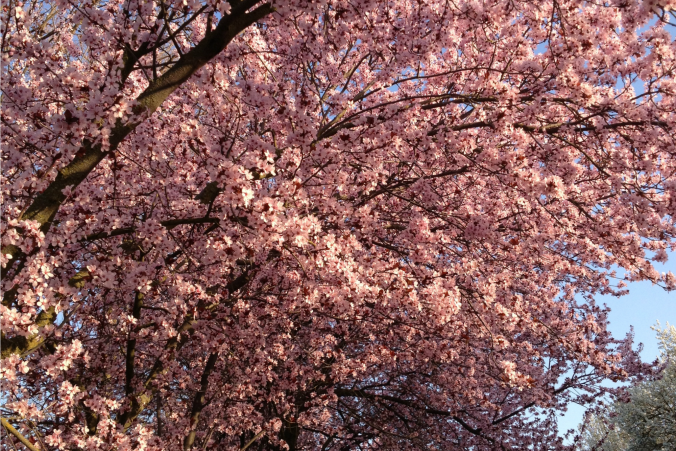
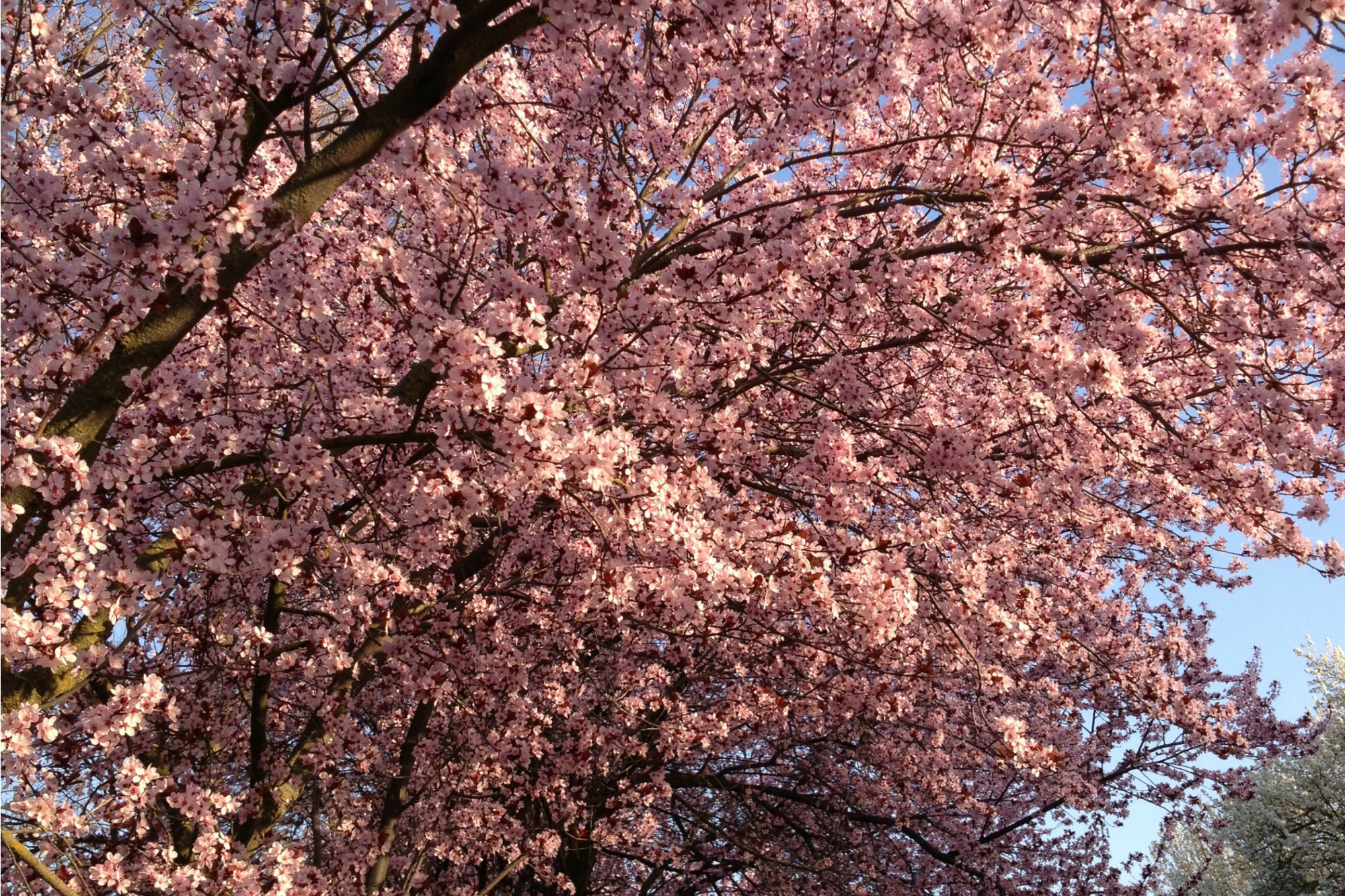
 There are many varieties of flowering plums (Prunus cerasifera). In late winter or early spring, abundant white or varying shades of pink flowers cover the tree, depending on the variety. Although the tree is called a “flowering” plum, many varieties also bear edible fruit, ranging from sour to bland in flavor. P.c. ‘Hollywood’ bears good quality plums, while P.c. ‘Allred’ is good for preserves or jelly. Most people choose flowering plums for spring flowering and fall color and are not interested in fruit.
Flowering plums make good lawn trees, and in this case you can plant any variety. Having fruit drop near sidewalk can be messy! P.c. ‘Krauter Vesuvius’ which grows 18-‘ tall by 12′ wide and has single light pink flowers should not bear fruit according to it’s description. However, it’s a small tree (10-12′ tall and 12’ wide). If you’ve had a different experience with these varieties or have one you would recommend, please respond to this post! (thanks to one reader who did, see his comments below.)
If you decide to plant a flowering plum in your landscape, be sure to purchase it from a local, reputable nursery. Local nurseries contract with tree growers who properly train and take care of the trees while they are young, ensuring they have excellent root systems. Trees grown elsewhere (such as at big box stores) may have multiple and competing major branches as well as poor root systems. The results of this combination are often seen in the landscape as a top-heavy, leaning tree. In many cases, a windstorm will easily knock them down.
It’s important to prune and train your tree, and to stake it correctly. Stakes only need to be used for about one year. Unfortunately, flowering plums do have a few problems, like shot hole disease in wet springs, and a high susceptibility to shot hole borers (an insect) when drought stressed. However, healthy trees are able to withstand these types of attacks. I will post a basic tree care blog soon for tips on keeping trees healthy.
| USDA Zones:5-10 Height: see above Width:see above Sun/Shade:Full sun Water Requirements: Moderate to regular water. Pruning: Prune for shape after flowering, major pruning in dormant season. |
September 30, 2013 at 9:38 pm
Krauter Vesuvius is definitely not anything close to fruitless. While young it doesn’t seem to produce many fruit but as it matures it can be prolific. Fruit number can be reduced by spraying with Florel, but many of my customers around Sacramento decide the messy fruit are too much hassle and they have the trees removed. And yes, Purple Pony is supposed to be completely fruitless, but the mature tree is only about 12’x12′.
October 2, 2013 at 9:34 pm
Hi Ken, thanks for your post. It’s always good to hear from gardeners who have these trees. I’m going to add that information to the post. Spraying them does sound like a hassle, when they were chosen because they were supposed to be fruitless!!